Indonesia's rattan homeweavers work with no transaction records. For brands facing ESG and due diligence demands, that is a traceability gap, and PasarMIKRO closes it at the weaver level.
The global rattan furniture market is worth billions, yet the women who weave it work almost entirely off the grid. For buyers and brands committed to responsible sourcing, that is more than a social issue. It is a traceability gap.
Who does the work
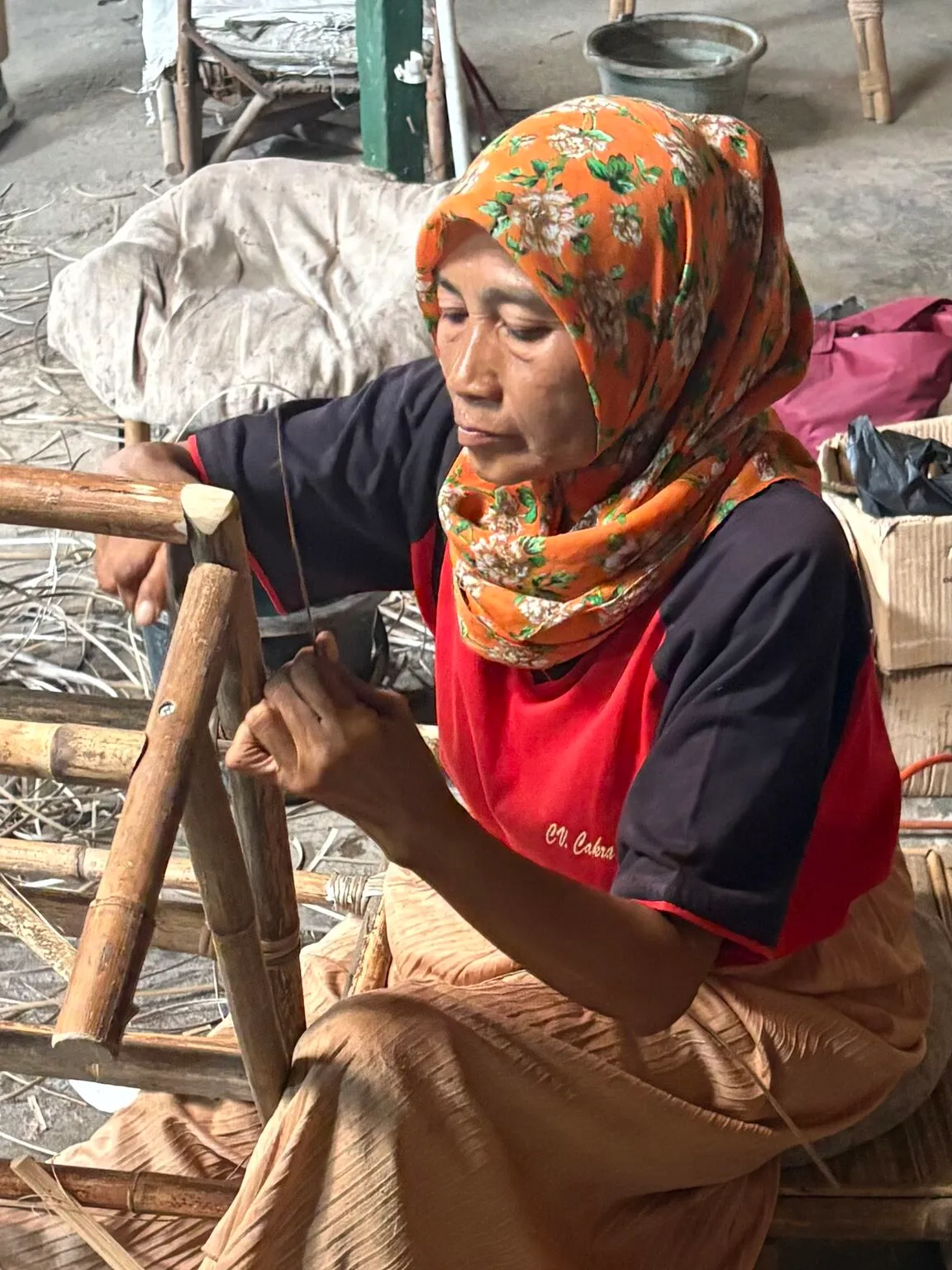
Homeweavers in Indonesia’s rattan hubs work as subcontracted labor. They have:
- no formal employment,
- no transaction records,
- no access to financing.
What buyers are now asked to show
International markets increasingly expect supply chain transparency down to the production unit. ESG compliance, due diligence regulations and impact reporting frameworks all point the same way: you need to know who made the product, and under what conditions.
When the people who make it leave no records, there is nothing to trace.
Closing the gap at the weaver level
PasarMIKRO works on this at ground level. Our platform digitizes the subcontractor and weaver layer of the supply chain:
- recording transactions,
- building production histories,
- creating the data infrastructure that responsible supply chains require.
For NGOs, funded programs and impact investors, this is where traceable, verifiable impact begins. Not at the factory, but at the hands that actually do the work. Read more about our traceability and digitization programs.
Work with us
If you want to build traceable and inclusive supply chains in Indonesia, write to us at hello@pasarmikro.id.
Tags
- Rattan
- Traceability
- ESG
- Due diligence
- Responsible sourcing