Keep selling Indonesian coffee and cocoa to Europe after 30 December 2026.
PasarMIKRO plots your farmers' land, collects and stores every piece of compliance information, and retrieves it on request, with each transaction linked back to the plot it came from. Your EU buyer gets answers, not excuses.
Free consultation and initial setup for companies that join by 13 November 2026.
Plot the land. Store the proof. Answer any query in seconds.
EUDR compliance comes down to three jobs that together give you plot-level traceability. PasarMIKRO handles all three, so when your EU buyer or an authority asks where a shipment came from, the answer is already on file and linked to the source.
Land plotting
Our field team walks each farm and records its exact location: a GPS point for plots up to 4 ha, a full boundary polygon for larger ones. Every plot is then checked against forest cover at 31 December 2020 and protected-area maps.
- Polygon mapping and GPS points captured on the phone, in the field
- One plot per polygon, as the EU requires
- Satellite monitoring for deforestation and protected areas on every plot
- Field re-visits for any plot that gets flagged
Information collection and storage
Everything EUDR asks for is collected once and kept in one secure place: who the farmer is, where the plot is, what land documents exist, and every purchase made from that plot. Records are kept for at least the five years the regulation requires.
- Farmer identity (KYC) and cooperative membership
- Land tenure evidence for legality verification: SHM certificates, STDB registrations, village letters
- Each purchase recorded digitally at the point of sale
- Stored at least 5 years, as EUDR requires
Information retrieval, linked to the source
When a buyer, auditor or EU authority asks about a shipment, you pull up the answer on request. Start from any transaction, lot or container and trace it back to the exact farmers and plots it came from, with the evidence attached.
- Search by transaction, lot, container or farmer
- Every transaction linked to its source plots
- Geolocation files ready to upload to the EU TRACES system
- Interoperable data exports for buyer systems and audits
What is the EUDR?
The EU Deforestation Regulation (EUDR), Regulation (EU) 2023/1115, is a European Union law that stops products linked to deforestation from being sold in the EU. It entered into force on 29 June 2023.
Any company that places coffee or cocoa on the EU market must prove three things for every shipment: it is deforestation-free, it was produced legally, and it can be traced back to the exact plot of land where it was grown. Without that proof, the product cannot clear EU customs.
Companies that break the rules face fines of up to at least 4% of their annual EU turnover, confiscation of goods and temporary exclusion from public contracts. That is why EU buyers are now pushing the data requirement upstream, to Indonesian exporters, cooperatives and farmers.
Seven commodities are covered
Products made from them are covered too: roasted coffee, cocoa paste, butter, powder and chocolate.
Key dates
What it means for Indonesia
The EU classifies Indonesia as standard risk. Every shipment needs full due diligence, and there is no simplified route.
No proof, no customs clearance. Every lot must pass three tests.
The European Commission confirmed in May 2026 that there will be no further delay.
1. Deforestation-free
The coffee or cocoa must come from land that was not deforested or degraded after 31 December 2020.
2. Legally produced
Grown in line with Indonesian law: land tenure and land-use rights, environmental rules, labour and tax obligations, with documents such as SHM land certificates or STDB registrations to show it.
3. Traceable to the plot
A due diligence statement in the EU information system with the geolocation of every plot: a GPS point for plots up to 4 ha, a polygon for larger ones.
Built for every link in Indonesia's coffee and cocoa chain
Exporters
Deliver DDS-ready data packs with each contract and keep your EU buyers.
Cooperatives & collectors
Register members and plots once, then record every purchase digitally on your phone.
Processors & grinders
Keep compliant and non-compliant volumes apart and trace each batch to its source plots.
EU buyers & brands
Get first-mile data from Indonesian origins you could not reach before.
EUDR for Indonesian coffee: from Lampung robusta to Gayo arabica
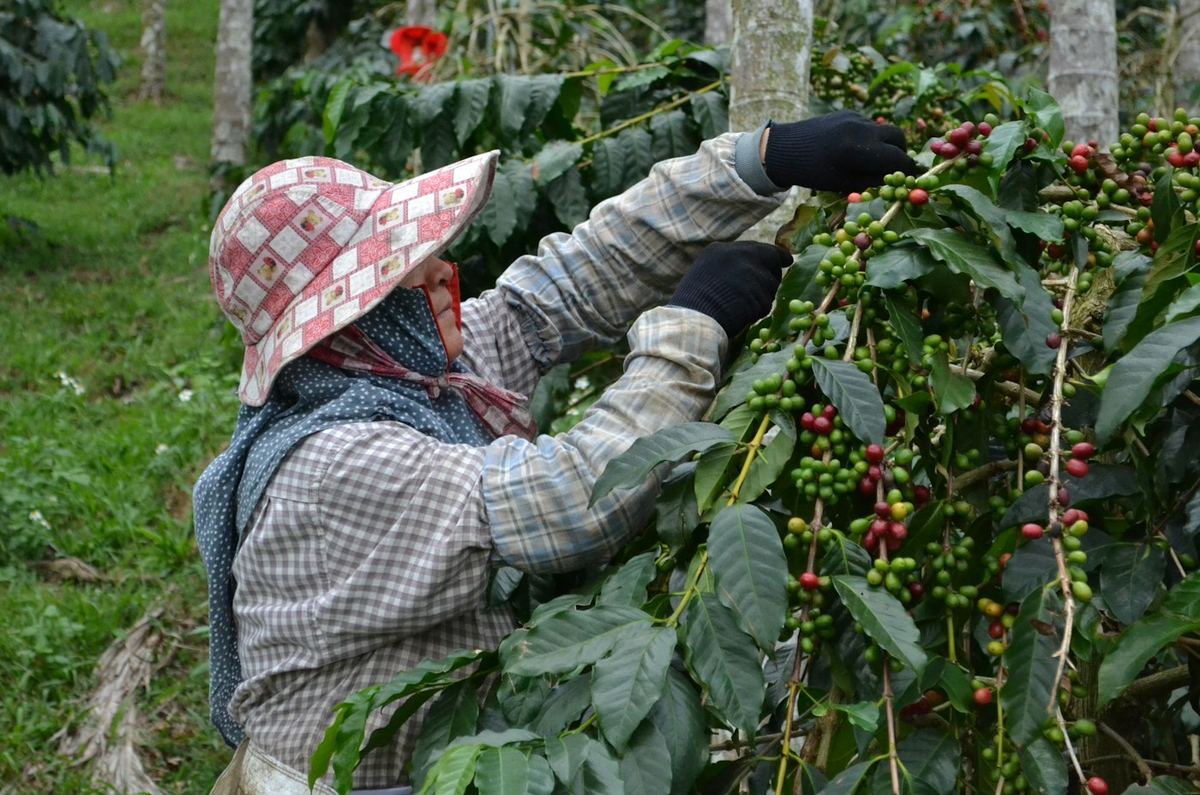
Indonesian coffee is grown mostly by smallholders on small plots, often bordering protected forest in Sumatra, and passes through several collectors before export. Blending lots from hundreds of farms is normal. Under EUDR, every plot in the blend must be known.
The coffee risk points we fix
- Farms near national parks and protected forest in Lampung, Bengkulu and South Sumatra
- Cherry and green bean bought through layers of collectors with no paper trail
- Blending lots from many origins in the warehouse
- Farmers without formal land certificates
What PasarMIKRO delivers
- Plot point or polygon for every supplying farmer, captured in the field
- Satellite screening against the 2020 forest baseline and protected areas
- Each purchase recorded in the app, linking plot to collector to lot
- Segregated, EUDR-ready lots and a data pack your buyer can file from
EUDR for Indonesian cocoa: Sulawesi, Bali and beyond
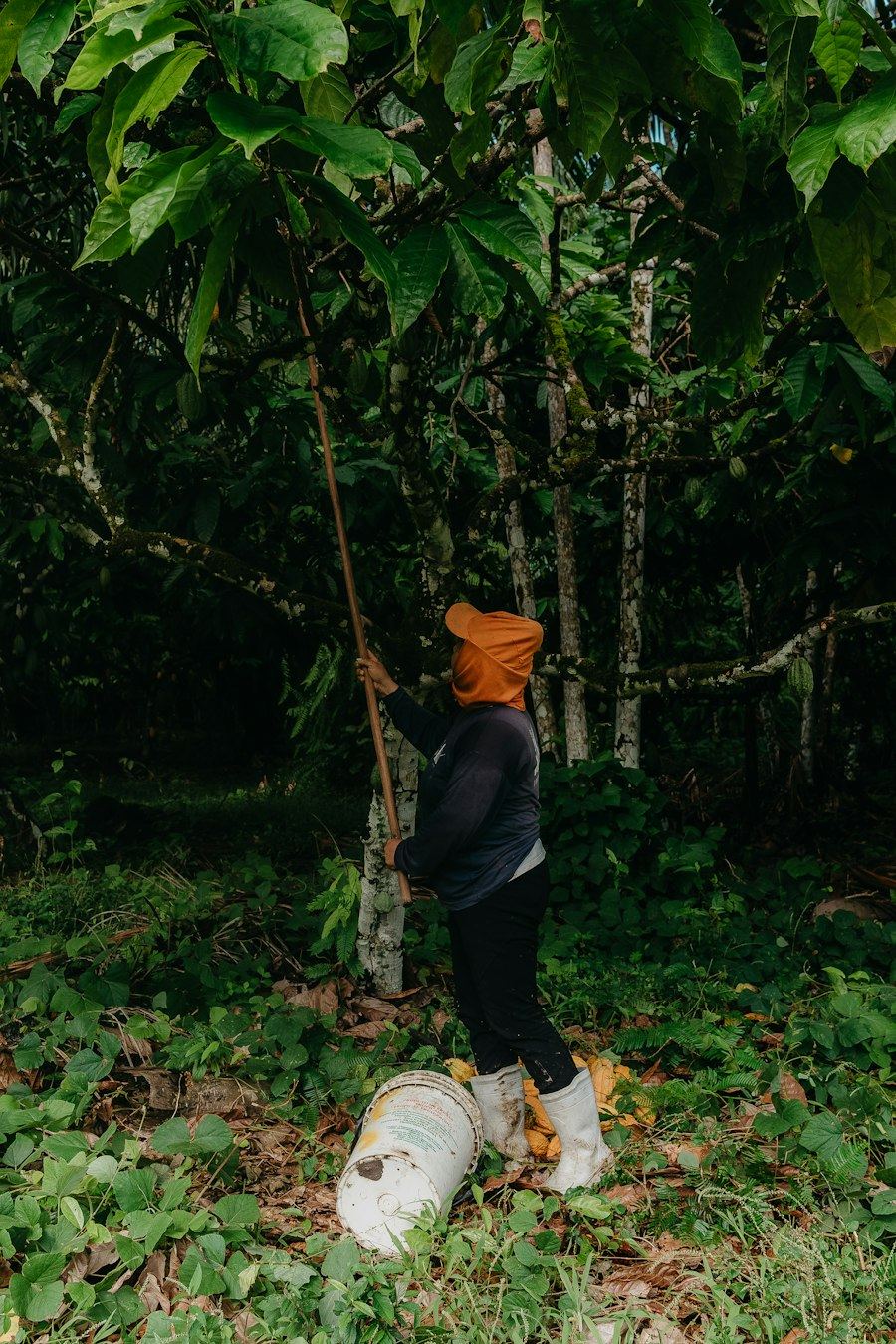
Indonesian cocoa comes from smallholder gardens, often agroforestry, and moves through village traders before reaching fermenters, grinders and exporters. EUDR covers beans and every derived product your EU buyer makes from them, so the plot data has to survive processing.
The cocoa risk points we fix
- Agroforestry gardens that look like forest on satellite images
- Wet beans pooled by village traders before fermentation
- Processing into paste, butter and powder that breaks the link to origin
- Cooperative member lists with no plot locations
What PasarMIKRO delivers
- Member and plot registry for cooperatives and traders
- Field verification to tell established agroforestry from new clearing
- Batch records from wet bean through fermentation to export lot
- Mass-balance and lot reports that keep plot links through processing
From farm gate to due diligence statement in five steps
Consultation
We map your supply chain, EU contracts and data gaps, and set a plan to hit your deadline.
Initial setup
Your company account, supply-chain structure and team onboarded on PasarMIKRO, ready to register farmers.
Farmer & plot mapping
Our field team and app register farmers (KYC) and capture plot points or polygons, then screen them against the 2020 forest baseline.
Traceable trade
Every purchase is recorded with the support of PasarMIKRO, so plot-to-lot links build themselves as you trade.
DDS-ready data pack
Geolocation files, risk evidence and lot records for each shipment, plus ongoing monitoring.
What EUDR readiness looks like for companies like yours
Example scenarios showing how a typical engagement runs.
A German importer asks for plot data on next season's contract
Challenge: beans arrive through a dozen collectors; the exporter knows the collectors but not the farms.
With PasarMIKRO: collectors onboard their farmers in the app, plots are mapped and screened, flagged farms near park boundaries are verified in the field, and compliant volume is bought and stored as separate lots.
Result: each container ships with a data pack the importer files from.
A cooperative risks losing its European grinder
Challenge: a member list on paper, no plot locations, and agroforestry gardens that satellites read as forest.
With PasarMIKRO: a member and plot registry, field checks to document gardens established before 2021, and digital purchase records through fermentation.
Result: the grinder receives evidence it can rely on, and members get faster payment.
A small exporter selling micro-lots to EU roasters
Challenge: many small lots, limited staff, and roasters each asking for data in a different format.
With PasarMIKRO: lightweight onboarding with Mikro ERP, one standard data pack per lot, and origin stories roasters can use on the bag.
Result: compliance becomes a selling point for specialty buyers.
Proven traceability work in the field
Rattan supply chain and home-weaver digitization.
Palm sugar traceability and sourcing compliance.
PNBP reporting for sustainable non-timber forest product supply chains.
Digitizing smallholder rice trade in one of Indonesia's key rice regions.
Why Indonesian companies choose PasarMIKRO for EUDR
Traceability built into trade
Data is captured as transactions happen, not in a one-off survey that is out of date by harvest.
Our own field team
On-the-ground verification, inspections and stock surveys where satellite data alone is not enough.
Finance that keeps farmers in
Embedded working capital and faster payments give farmers and collectors a reason to share data.
Local, in Bahasa Indonesia
A Jakarta-based team that speaks to farmers and to EU compliance managers.
Your own dashboard
Custom dashboards and white-label deployments for exporters, cooperatives and processors.
Ready for the national system
Interoperable data, structured to share with buyers' systems and align with Indonesia's national traceability dashboard.
Join the PasarMIKRO EUDR Program by 13 November and your consultation and setup are free.
The fastest way to be ready for 30 December is to start now. Sign up by 13 November and we waive the cost of getting you started.
Supply-chain review, gap list and a timeline to compliance with our EUDR team.
Company account, supply-chain structure and team training on PasarMIKRO.
Offer valid for companies that sign up for the PasarMIKRO EUDR Program by 13 November 2026. Terms apply.
EUDR questions from Indonesian exporters
When does EUDR apply to Indonesian coffee and cocoa?
From 30 December 2026 for large and medium companies placing products on the EU market, and from 30 June 2027 for micro and small companies. The European Commission confirmed in May 2026 that there will be no further postponement.
I export from Indonesia. Do I file the due diligence statement?
Usually your EU importer files it, as the first company placing the goods on the EU market. But they can only do so with your plot geolocation, legality evidence and lot records, so in practice the data work sits with you.
What risk level is Indonesia?
Standard risk. Operators must run full due diligence with risk assessment and mitigation, and EU authorities check at least 3% of operators sourcing from standard-risk countries.
Do smallholders need polygons?
Plots of 4 hectares or less can be recorded as a single GPS point; plots over 4 hectares need a polygon of the boundary. Many buyers prefer polygons for all plots because they make deforestation checks more reliable.
Is a certification like Rainforest Alliance or Fairtrade enough?
No. Certification helps with risk assessment, but EUDR still requires plot geolocation and a due diligence statement for every shipment.
What does the early-joiner offer include?
Companies that sign up for the PasarMIKRO EUDR Program by 13 November 2026 get the EUDR consultation and the initial platform setup free of charge.
Book your free consultation and setup.
Tell us about your coffee or cocoa business. We call you within one working day, review your supply chain and EU contracts, and get you set up on PasarMIKRO at no cost.